

China CDC (Chinese Academy of Preventive Medicine) Researcher Shi Xiaoming's Team Wins Third Place in the Prize Stage of the U.S. National Academy of Medicine's Healthy Longevity Global Competition


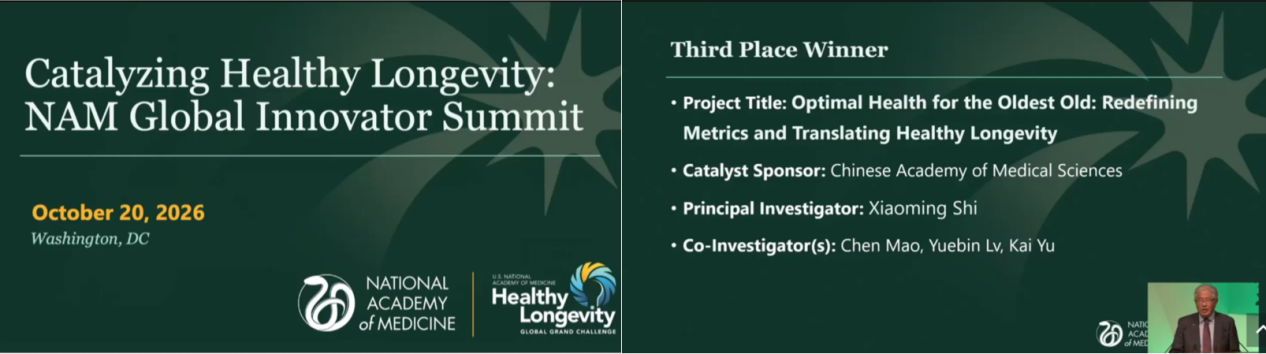
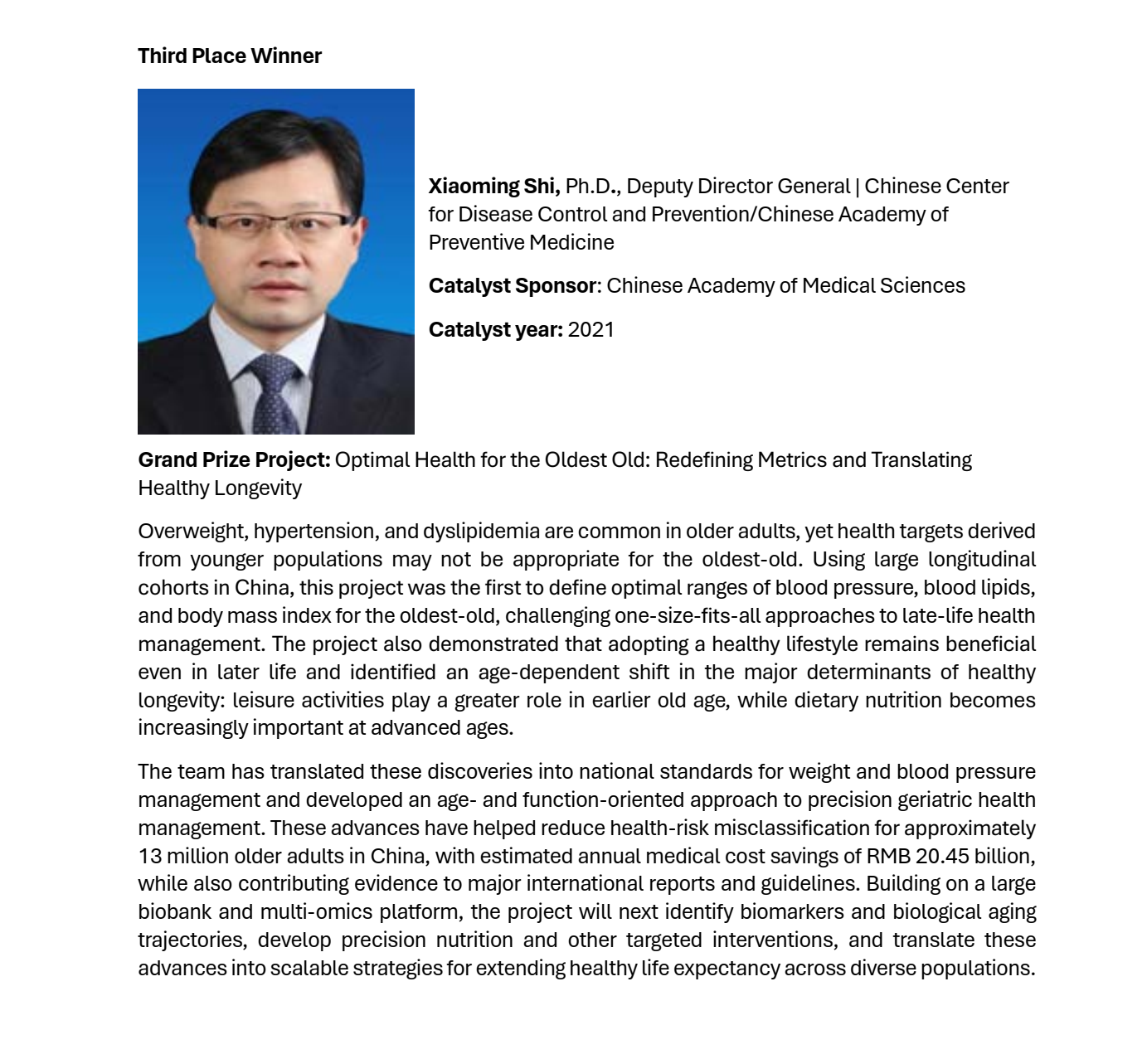
On October 20, 2026, local time, the U.S. National Academy of Medicine (NAM) announced and presented the awards for the Prize Stage of the Healthy Longevity Global Competition at the Global Innovation Summit held in Washington, D.C., United States. The project "Optimal Health for the Oldest Old: Redefining Metrics and Translating Healthy Longevity", led by Researcher Shi Xiaoming of the Chinese Center for Disease Control and Prevention (Chinese Academy of Preventive Medicine), was awarded third place — the only project among the top three winners from Asia in this edition of the competition.
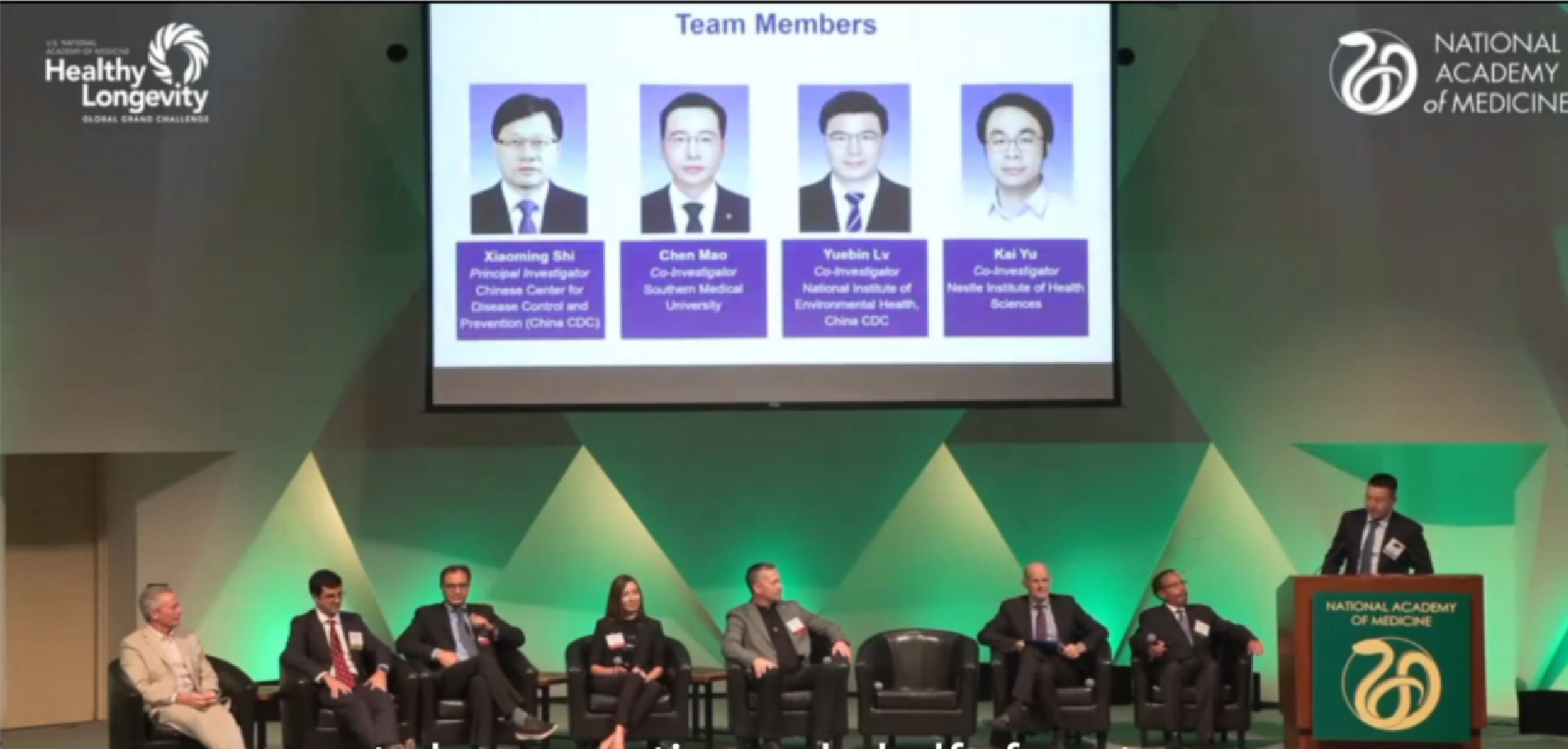
The project is led by Shi Xiaoming as Principal Investigator (PI), with Mao Chen of Southern Medical University, Lv Yuebin of the National Institute of Environmental Health, China CDC, and Yu Kai of the Nestlé Research Center for Health Science serving as Co-Investigators. Supported by funding including the National Science Fund for Distinguished Young Scholars of the National Natural Science Foundation of China and the National Key Research and Development Program, the team has conducted systematic research on health assessment of the oldest old, key determinants of healthy longevity, and the translation of research findings, based on the Chinese Longitudinal Healthy Longevity Survey (CLHLS) biomarker cohort study. The team has achieved three main outcomes: First, for people aged 80 and above, it examined the associations of blood pressure, blood lipids, and body mass index with health outcomes such as mortality risk and cognitive function, providing population-based evidence for determining appropriate ranges for these indicators, and proposing that health assessment should fully take into account age characteristics and functional status. Second, it revealed how key determinants of healthy longevity vary with age, finding that leisure activities play a more prominent role in the young-old, while dietary nutrition is more critical at advanced ages, providing a basis for age-stratified health interventions. Third, it promoted the translation of research evidence into standards and tools, leading the development of the group standard "Guideline on the Optimal Range of Blood Pressure for the Oldest Old in China" (T/CPMA 017—2020), contributing to the health industry standard "Optimal Range of Body Mass Index and Weight Management for the Oldest Old" (WS/T 868—2025), and developing a risk assessment tool for cognitive impairment, thereby establishing an age- and function-oriented approach to health management. Over the past five years, the team has published more than 40 SCI-indexed papers, obtained 5 invention patents and 3 software copyrights, and its translational outcomes have been applied in reports and guidelines issued by the World Health Organization, the European Society of Cardiology, and the Canadian Institute for Health Information's Seniors Council, among others.
The project's research approach and translational value drew widespread attention from experts attending the summit. Professor Victor Dzau, former President of the U.S. National Academy of Medicine, member of the American Academy of Arts and Sciences, and faculty member at Duke University, stated in announcing the third-place winner that the study focuses on the health of the oldest old, and that — given China's vast population — re-examining health assessment indicators and promoting the translation of healthy longevity research is a research direction worthy of recognition. Linda Fried, member of the U.S. National Academy of Medicine and professor at Columbia University, commented that the study established a framework for measuring healthy longevity among people aged 80 and above, and precisely identified dietary components and types of physical activity that promote healthy longevity. According to the NAM's official account, the project is based on a large-scale Chinese longitudinal cohort and provides research evidence for the optimal ranges of blood pressure, blood lipids, and body mass index in the oldest old, helping to shift away from one-size-fits-all assessment approaches that do not account for age, and promoting a transition in health management from uniform indicator-based evaluation to stratified management that takes both age and functional status into consideration, while translating relevant findings into health management standards and practical methods. In her overall assessment of this year's winning projects, Monica M. Bertagnolli, President of the U.S. National Academy of Medicine, noted that the award-winning achievements demonstrate the potential of global innovators working together to explore solutions that help people around the world live longer, healthier lives. These evaluations and exchanges reflect international peers' attention to the evidence from Chinese oldest-old cohorts and its applied value, and provide direction for further deepening the research and expanding international cooperation.
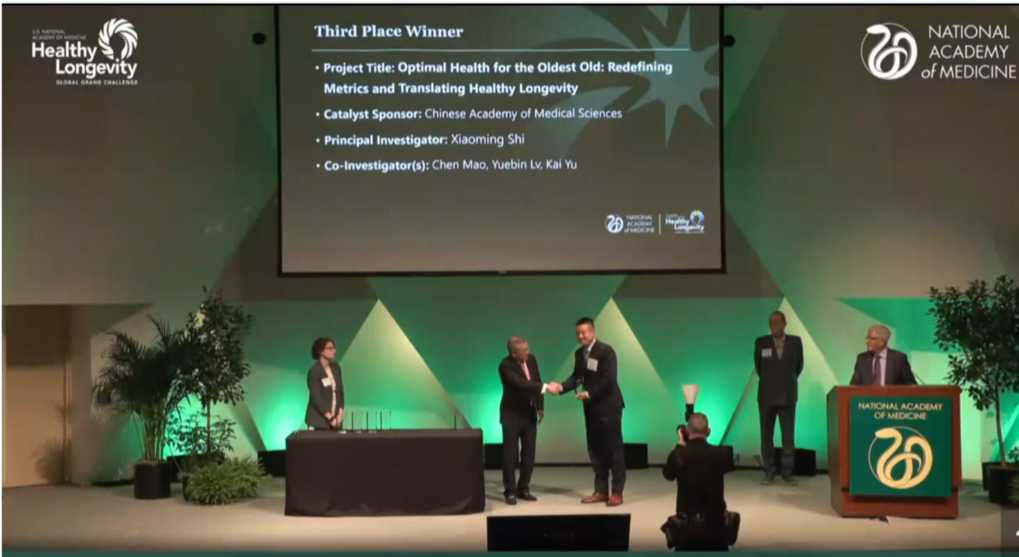
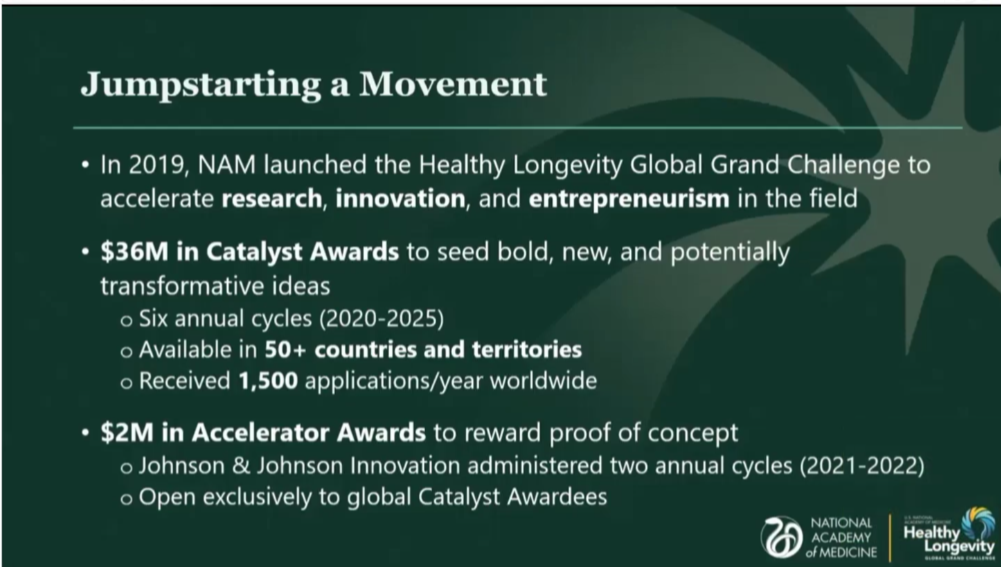
The Healthy Longevity Global Competition, launched by the NAM in 2019, is part of the "Healthy Longevity Global Grand Challenge", an initiative aimed at extending human healthspan by supporting research, innovation, and entrepreneurship. Through partnerships with national and regional medical research institutions in China, the European Union, the United Kingdom, Japan, Singapore, and other countries and regions, the U.S. National Academy of Medicine has established a global partner network and created three stages — the Catalyst, Accelerator, and Prize Stages — to support the development of early-stage ideas and their subsequent translation into research. Regional partners are responsible for selecting Catalyst Award recipients in their respective countries or regions and providing project funding. As the NAM's partner in China, the Chinese Academy of Medical Sciences has been responsible for selecting and funding Catalyst Award recipients for China since 2020. Between 2020 and 2025, the NAM and its global partners received more than 10,000 project applications from over 50 countries and awarded 720 Catalyst Awards; Shi Xiaoming's team received the China-region Catalyst Award in 2021 with funding from the Chinese Academy of Medical Sciences. The 2026 Prize Stage was open for applications from past Catalyst Award-winning teams. Following preliminary screening by global partners, multiple rounds of review organized by the NAM, and evaluation by an interdisciplinary selection committee, projects were assessed primarily on their actual or potential impact on human health and longevity, global applicability, accessibility and scalability, as well as project progress and future vision. From 147 semifinalist projects, the Prize Stage selected 14 winning projects: Hans Keirstead's team from Immunis, Inc. (United States) and David Pépin's team from Massachusetts General Hospital were jointly awarded the Grand Prize; Victoria Chuchina's team from CheckEye (Ukraine) and Mohammad Mahoor's team from DreamFace Technologies (United States) were jointly awarded second place; and Shi Xiaoming's team from the Chinese Center for Disease Control and Prevention (Chinese Academy of Preventive Medicine) won third place — the only winning project from Asia — reflecting the progress made by Chinese teams in population-based healthy longevity research and the translation of research findings. In addition, nine projects received honorable mentions.
Looking ahead, the team will continue to leverage its two core strengths — long-term cohort data and health management standards — to translate research findings into scalable healthy longevity interventions. The project has established the world's largest biomarker cohort of centenarians, comprising more than 4,000 centenarians, and has built a full-lifespan multi-omics research platform covering tens of thousands of participants. By integrating indicators such as cognition, physical function, and chronic disease status, the team identifies biomarkers of healthy longevity and characterizes aging trajectories at both the individual and organ levels, developing simple, affordable health assessment tools suitable for primary care settings. In terms of standard application, the team will promote the implementation of blood pressure and weight management standards in community, clinical, and elderly care settings; carry out precision nutrition interventions and the development of age-friendly products tailored to the nutritional needs of the oldest old; and conduct cross-regional, cross-population validation to clarify the applicable conditions of relevant indicators and intervention strategies in East Asia and globally — thereby providing scientific support for improving functional status and quality of life among older adults worldwide and extending health-adjusted life expectancy.
——Office of Science and Technology


京ICP备11024750号-1 京公网安备11011402013004号