


The 25th Regular Meeting of the Liangshan Work Station Convened in Xichang


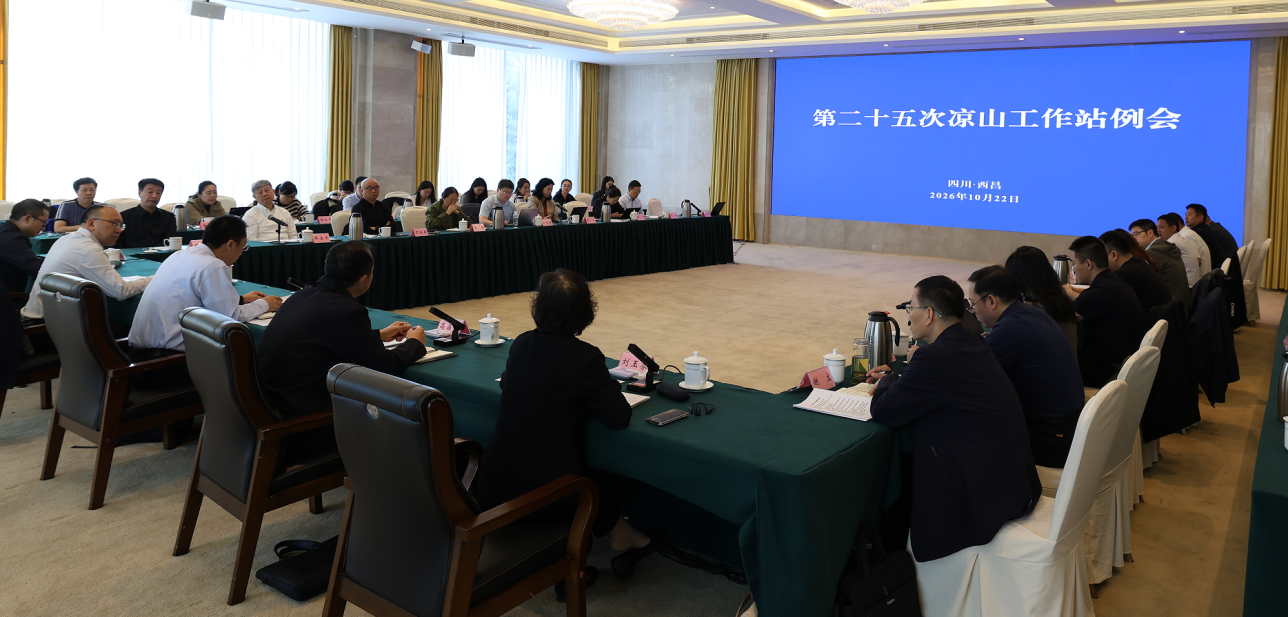
On October 22, 2026, in order to further advance the third-phase action plan for the prevention and control of AIDS and other major infectious diseases in Liangshan Prefecture, the 25th regular meeting of the Liangshan Work Station was held in Xichang City, Sichuan Province. Yin Zundong, a member of the Standing Committee of the CPC Committee and Deputy Director (Vice President) of China CDC (Chinese Academy of Preventive Medicine); Xie Renxing, Director of the Sichuan Provincial Center for Disease Control and Prevention; and Gao Jingjing, Vice Governor of the Liangshan Prefectural Government, attended the meeting and delivered remarks. Liu Yufen, Acting Deputy Director of the National Center for AIDS/STD Control and Prevention, presided over the meeting. More than 40 representatives from China CDC, the Chinese Association of STD and AIDS Prevention and Control, the Chinese Foundation for Prevention of STD and AIDS, paired-assistance provinces including Beijing, Shanghai, and Guangdong, as well as relevant organizations from Sichuan Province and Liangshan Prefecture, attended the meeting.
The meeting fully recognized the achievements of Liangshan Prefecture in the first two phases of the prevention and control campaign, introduced the work plan for the work station in the third phase, the action plan for the campaign, and supporting arrangements. It also heard reports on progress and technical support needs in integrated prevention and control of the "four diseases", prevention of mother-to-child transmission, and treatment management. Participants exchanged views and held discussions on the operation of the work station, multi-disciplinary collaboration, and priorities for technical support in the next stage.
The meeting emphasized that, in line with the requirement of the "three shifts" for the third-phase action, efforts should be made to strengthen coordination among the work station, expert groups, and all parties providing assistance; deepen integrated prevention and control of the four diseases; improve the quality of screening, diagnosis, and treatment services; and enhance local capacity building. Local needs should be matched item by item with the support tasks of all parties, a work ledger should be established, and implementation should be continuously tracked, so as to provide strong support for the third-phase action.

京ICP备11024750号-1 京公网安备11011402013004号