

Breaking Barriers and Driving Innovation: 2026 Symposium on Surveillance-Response Systems Leading to Tropical Disease Elimination Opens in Shanghai


The 2026 Symposium on Surveillance-Response Systems Leading to Tropical Disease Elimination opened in Shanghai on September 21, 2026. Co-hosted by the National Institute of Parasitic Diseases, China CDC (Chinese Center for Tropical Disease Research), the Swiss Tropical and Public Health Institute (Swiss TPH), and the journal Infectious Diseases of Poverty, the symposium focused on the theme "Breaking Barriers and Driving Innovation: Surveillance Systems for Tropical Disease Elimination in a Transforming Global Health Landscape." Chen Zhao, Deputy Director of the Department of Health and Immunization at the National Disease Control and Prevention Administration; Zhang Hao, Deputy Director of the Shanghai Municipal Health Commission and Director of the Shanghai Municipal Administration of Disease Control and Prevention; Li Qun, Deputy Director of China CDC and Member of the Standing Committee of its CPC Committee; and Sacha Bachmann, Consul General of the Swiss Confederation in Shanghai, attended the opening ceremony and delivered remarks. The ceremony was chaired by Li Shizhu, Director of the National Institute of Parasitic Diseases.
Experts from the WHO Department of Malaria and Neglected Tropical Diseases, as well as institutions in Switzerland and Indonesia, delivered keynote presentations on emerging health challenges posed by tropical diseases, new strategies for surveillance, prevention and control, and recent progress in multilateral cooperation. A roundtable discussion was also held, focusing on two key questions: how to break through surveillance and response bottlenecks amid the transformation of global health, and what new tools and initiatives are needed. Participants reviewed progress and challenges, explored future directions, and built consensus on cooperation.
The three-day symposium featured annual meetings of four international cooperation networks — the China-Africa Malaria Cooperation Network, the Schistosomiasis Cooperation Network, the Asian Network on Schistosomiasis and Other Helminthic Diseases, and the International Cooperation Network on Echinococcosis and Taeniasis/Cysticercosis — as well as five thematic workshops covering certification of the elimination of schistosomiasis as a public health problem, cross-border vector-borne diseases, clonorchiasis, and echinococcosis prevention and control. Participants exchanged advances in theory, technological innovation, and practical implementation of surveillance and response systems for tropical diseases, promoted collaboration among research, prevention and control, project management, policy-making, and international organizations, and explored new pathways adapted to the transformation of global health.
During the symposium, the National Institute of Parasitic Diseases, China CDC also signed Memoranda of Understanding on tropical disease cooperation projects covering the Lancang-Mekong region, Indonesia, Burkina Faso, and other areas with the World Health Organization and research institutions of relevant countries, laying a foundation for further advancing multilateral cooperation in tropical disease control. Approximately 300 representatives from international organizations, universities, and disease control and research institutions both in China and overseas attended the symposium.
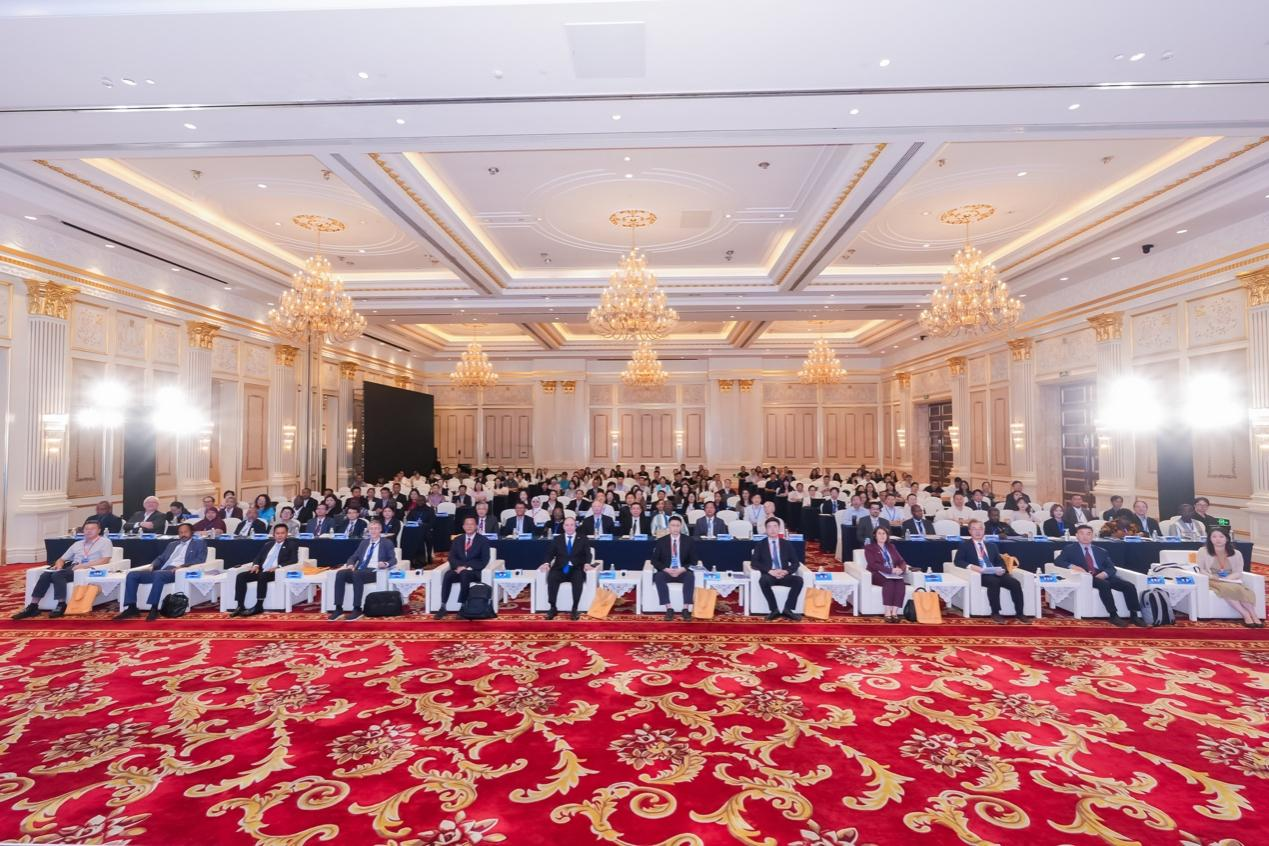
Group photo of the symposium participants
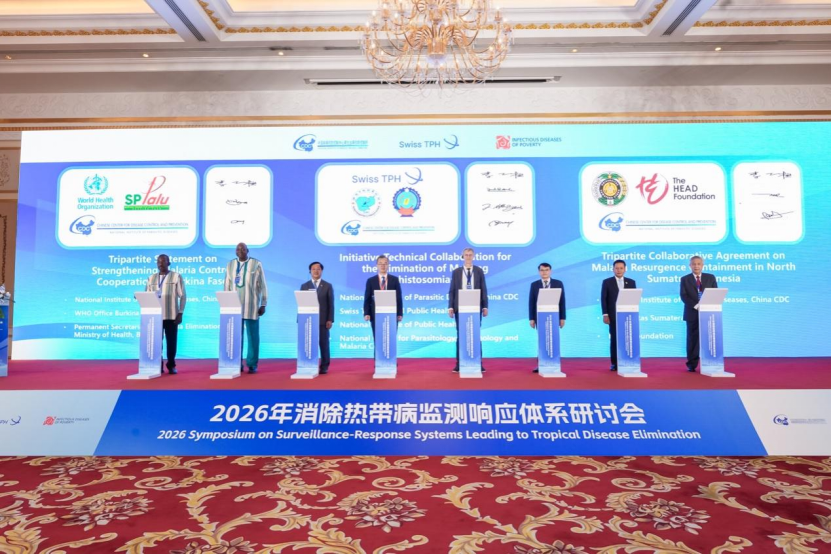
National Institute of Parasitic Diseases, China CDC signs memoranda of cooperation with WHO and research and academic institutions from relevant countries


京ICP备11024750号-1 京公网安备11011402013004号