

Training Course on Laboratory Techniques for Malaria Molecular Epidemiology for Sierra Leone Opens in Beijing


On September 2, 2026, a training program on malaria molecular epidemiology and laboratory techniques for Sierra Leone was officially opened in Beijing. The program is funded by the Bill & Melinda Gates Foundation and hosted by the Chinese Center for Disease Control and Prevention (China CDC), with joint implementation by the National Institute for Communicable Diseases Control and Prevention, the National Institute of Parasitic Diseases under China CDC, the Jiangsu Provincial Institute of Parasitic Diseases, and BGI Research. Participants from Sierra Leone will take part in a 16-day systematic training program in China.
The opening ceremony was attended by Qi Xiaopeng, Director of the Center for Global Public Health of China CDC; Liu Qiyong, Chief Expert in Vector Biology; Chen Junhu, Director of the Vector Biology Department of the National Institute of Parasitic Diseases; Cao Jun, Director of the Jiangsu Provincial Institute of Parasitic Diseases; and Wang Daxi, Principal Scientist at BGI Research. Alie Brima Tia, head of the Sierra Leonean delegation, delivered remarks on behalf of the Sierra Leonean side.
The program aims to build a local talent pipeline in Sierra Leone capable of independently conducting molecular surveillance of malaria. It adopts an integrated "online–offline–hands-on" model: prior to arriving in China, participants completed online courses developed by the Chinese side and performed basic sequencing operations at local laboratories in Sierra Leone. Following a selection process, they traveled to China for the final phase of capacity building. The training in China is conducted in three phases: the first phase, held in Changping, Beijing, focuses on vector control and mosquito surveillance fundamentals; the second phase, held in Wuxi, Jiangsu, focuses on molecular diagnosis of malaria parasites and amplicon sequencing pre-processing; the third phase, held at BGI Beijing Innovation Center, focuses on high-throughput sequencing and bioinformatics analysis.
Representatives of the Sierra Leonean delegation noted that this cooperation goes beyond the introduction of advanced technologies—it is about building sustainable local capacity so that Sierra Leone can independently generate and analyze genomic data to guide more precise malaria interventions.
This program marks another important initiative in China–Sierra Leone public health cooperation and will provide strong technical support for malaria prevention and control in Sierra Leone.
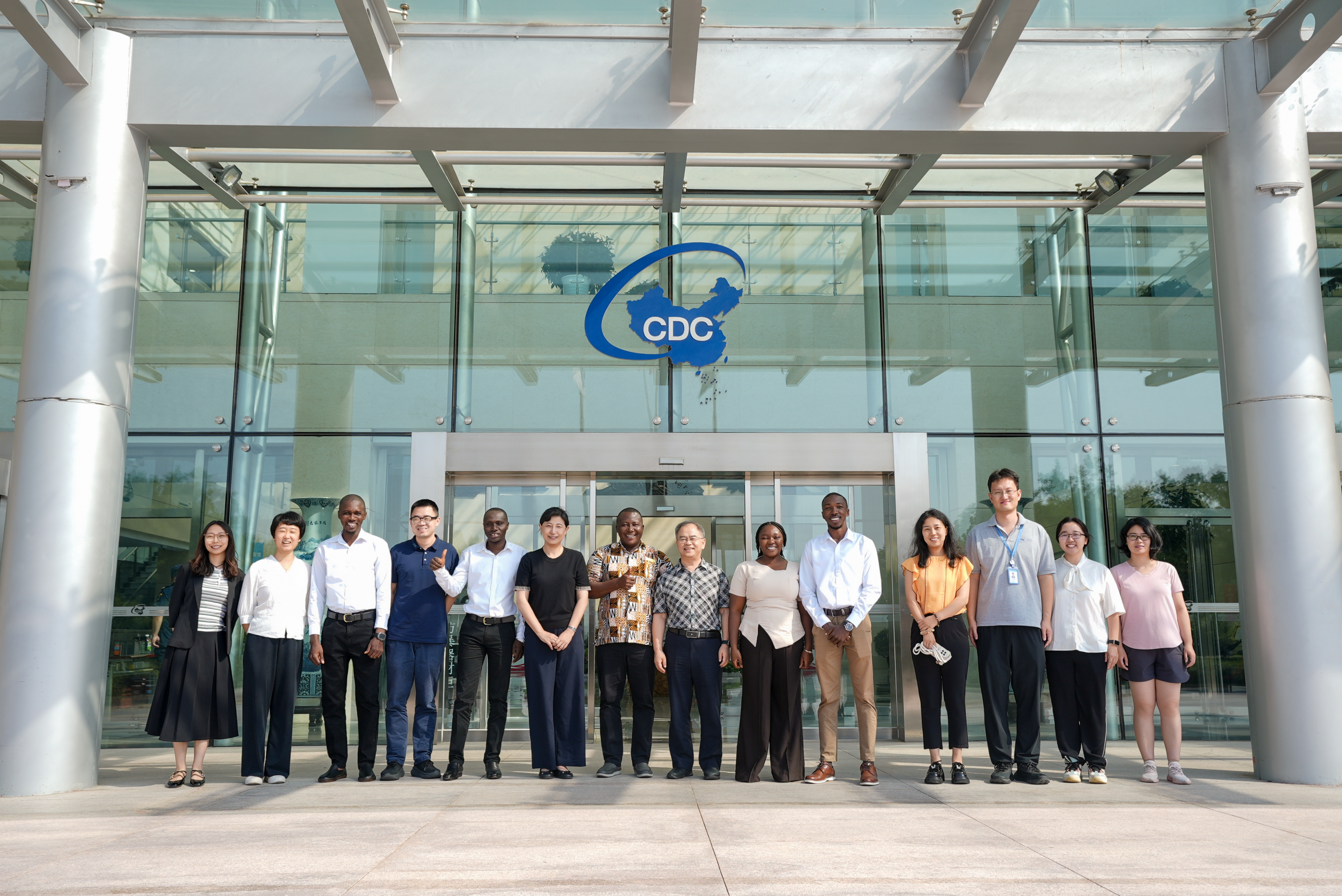
Group photo at the Opening Ceremony of the Training Course on Laboratory Techniques for Malaria Molecular Epidemiology for Sierra Leone

京ICP备11024750号-1 京公网安备11011402013004号